
Accelerating Student Success: Neoden USA is sponsoring ASU's Sun Devil Motorsports
26th Jan 2026
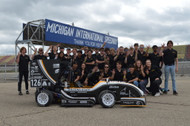
TEMPE, Arizona — Each year, students on Arizona State University’s Sun Devil Motorsports team take on the challenge of designing and building a formula-style race car for the Formula SAE competition. The project gives students real-world experience in engineering, manufacturing, and teamwork as they work toward a shared performance goal under demanding timelines.
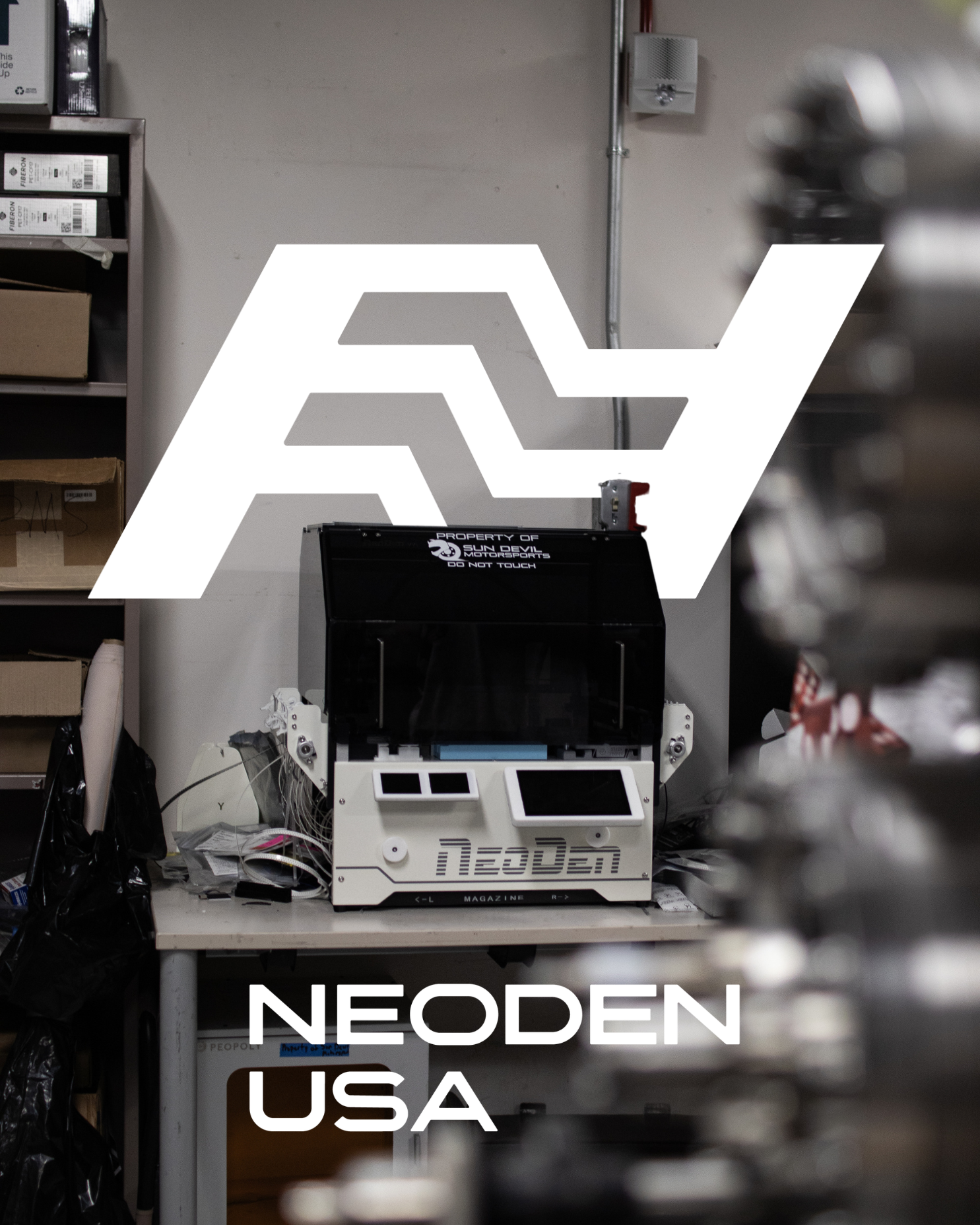
This season, Neoden USA is proud to sponsor the team’s efforts by providing a Neoden YY1 pick and place machine, supporting their ability to assemble custom DAQ electronics in-house.
As the Formula SAE competition at Michigan Speedway approaches later in the spring semester, Sun Devil Motorsports is continuing to develop and refine this year’s car. The full customer story explores their process, progress, and the practical impact of building critical electronics in-house.
Inside ASU’s DAQ Team and Their PCB Build Process
Sun Devil Motorsports (SDM) isn’t just building a Formula SAE car. They’re running a professional organization that's led by students and operates under real deadlines, constraints, and real performance expectations. And for SDM’s Data Acquisition (DAQ) team, that means designing and manufacturing the electronics that turn a student-built vehicle into data-driven success.
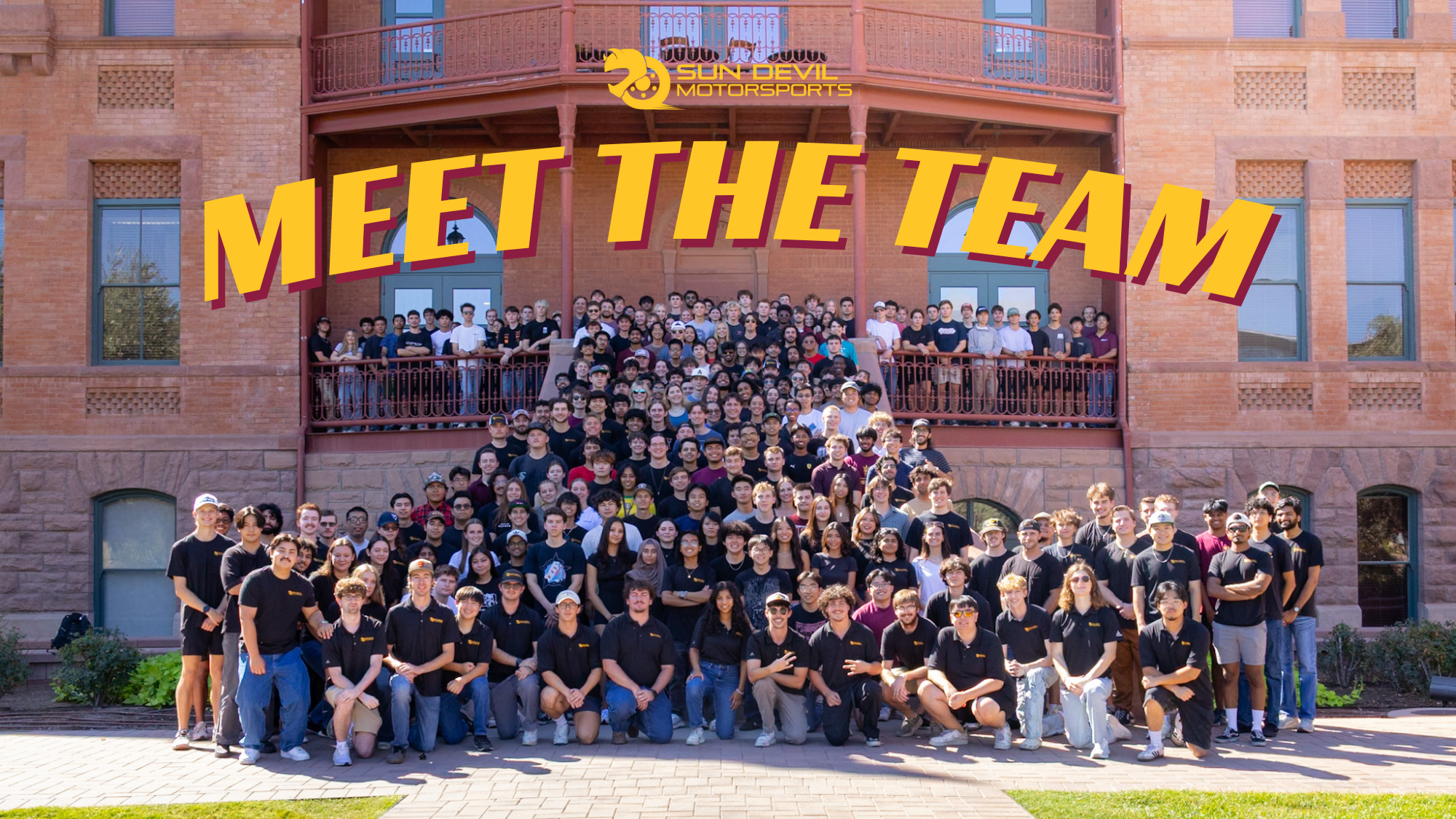
In our first announcement, we shared that Neoden USA is sponsoring Sun Devil Motorsports by providing their team with a Neoden YY1 pick and place machine. In this story, SDM students walk us through their workflow, from component selection to PCB review, manufacturing, and the reality of building a formula-style race car while balancing school work and jobs during crunch time.
An Inside Look at DAQ and Their Workflow
Unlike many subteams that focus on very specific parts of the car, DAQ is tied into nearly everything. The DAQ team works alongside suspension, drivetrain, engine, aero, and controls to determine what data is needed to validate design decisions.
“Other sub teams function kind of like our customers,” said Alex Rimmer, DAQ team member. “They have specific data points they need… and we build our system around the wants and needs of the other sub teams.”
That demand changes year to year because the car changes year to year. But DAQ’s job remains consistent: to deliver a system that helps Sun Devil Motorsports' (SDM) engineers test, tune, and improve faster. One of the most impressive things about SDM’s DAQ team isn’t just the hardware, but the process they’ve built around it; a process designed to train students while still meeting deadlines.
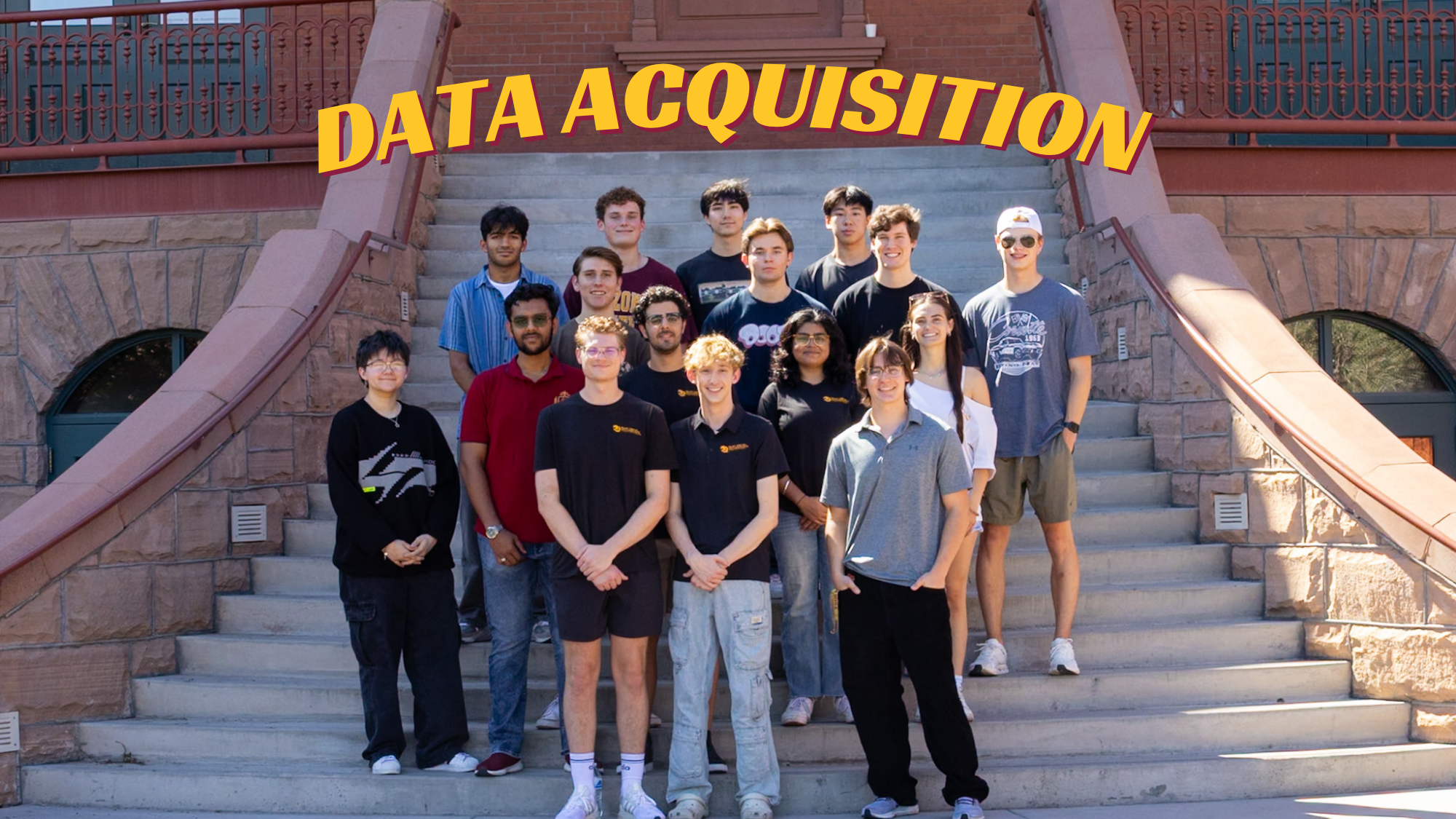
The workflow typically starts the same way: DAQ meets with other subteams to determine what data is needed, then moves into component selection by evaluating datasheets, balancing performance, cost, and board space. Once the schematic and layout are complete, DAQ holds a PCB review meeting. “We have the PCB review process because really, it’s a learning process,” Alex explained. “We want to be able to teach you how to design the boards.”
The team iterates designs in GitHub, and they’re actively working toward standardizing and reusing designs from year to year instead of redesigning everything each season. Historically, SDM rebuilt the entire electronics package annually. Now, with more experience and the ability to perfect their designs using the Neoden YY1 pick and place machine, they see themselves moving toward a mature system baseline where only the necessary modules change each year. “We could easily be at a point in the next one to two years where there are a couple boards where we just keep the design,” the team shared.
Building In-House: One Central Logger, Many Modules
While most Formula SAE teams purchase prebuilt data acquisition systems, SDM chose a more demanding path: they design and build their own. This decision was initially made due to budget constraints, but they soon realized how much of a strategic advantage it gave them. They didn’t want to be confined to a fixed commercial system because flexibility is just as important as cost. “A MoTeC data logger costs anywhere from $5,000–$8,000,” Alex said. “It costs about $98 to manufacture [our] data logger.” Building in-house gives the team the freedom to add important features and tailor the system to SDM’s unique design goals while staying mindful of their budget.
In total, the DAQ team is preparing approximately 11 unique PCB designs, amounting to about 16–20 boards integrated into the car. These are used throughout the vehicle, including extremely space-constrained assemblies such as boards mounted inside the wheel hubs that track wheel speed and rotor temperature.
With their custom DAQ system, the team collects sensor data from across the car for post-test analysis. That includes inputs from analog sensors as well as data sent over the CAN network, a communication system that allows the car’s electronic modules to exchange information. “Everything is time stamped, and engineers can pull the data later to make decisions," explained DAQ member Matthew.
The Turning Point: Designing Without Tweezers in Mind
Before the YY1, manual component placement shaped nearly every design choice. Dense layouts were possible, but hard to build reliably, especially as boards grew more complex or moved toward smaller passive sizes. “Only three or four people could manufacture boards by hand,” Alex said, noting that manual assembly required training, steady hands, and a lot of time under a microscope.
With the YY1, those constraints started to lift, and it changed how students think about their designs.
“We used to take into account the manufacturability of these boards,” Matthew said. “Leaving space for tweezers… getting your hand in there. Now… I did not think about leaving space for manufacturability. It changes everything.”
“It’s very unique,” Alex added. “We can adopt whole new design principles.”
The team has already reported nearly 40% board footprint reduction, driven by tighter component placement, double-sided boards, and denser designs. They’re also considering shifting from 0603 passives to smaller packages like 0402 as inventory refreshes, enabling even more decreases in footprint.
Double-Sided Assembly and High-Density Builds
One of the biggest immediate gains from the YY1 was enabling consistent double-sided manufacturing.
“Dual sided boards is a big part,” Matthew explained. “Before… it’d be uneven under the microscope. You can’t get it to focus. The Neoden just does it right.”
As board complexity grows, the time savings become even more meaningful. One of SDM’s most feature-dense designs, the steering wheel board, includes a mix of display drivers, microcontroller circuitry, LEDs, buttons, and more.
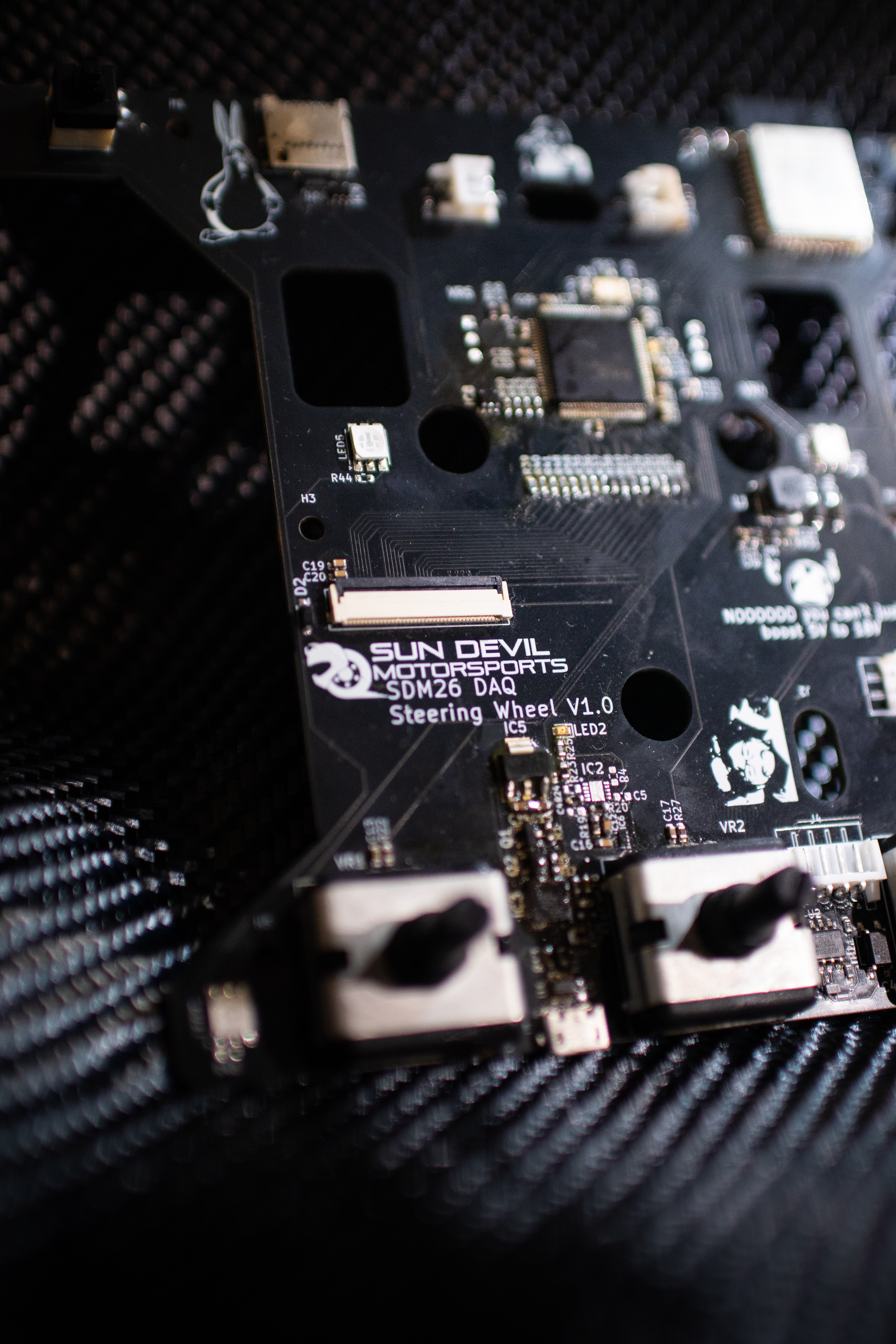
Caden, a member of the DAQ team, noted that he recently finished setting up the YY1 placement file for the wheel board: 133 placed components, not including additional connectors.
Revision Reality: Learning Curves and Navigating Challenges
Even with strong process controls, design iteration is unavoidable, especially when implementing a new platform. This year, SDM moved from an STM32 microcontroller approach to ESP32, largely because it’s more forgiving and easier to support as new students join the team.
“With the ESP32… if there’s a small mistake, you can switch it in the programming and you’re good to go,” the team shared. “It [has] saved our butts a couple times.”
The transition still involved a learning curve, and the team described early manufacturing rounds where boards were repaired and reworked while they refined their methods.
At one point, they even created what they call their “Frankenstein logger:” a patched board held together with enamel wires and component swaps during development. Today, the team says they have a competition-ready logger completed.
For other boards, like their wheel board, revisions have been small and strategic. The team can now keep the YY1 program and stencil unchanged, saving time and money while ensuring a perfect final version for competition.
But DAQ doesn’t stop once boards are assembled. The team also builds and tests the wiring harnesses required to connect a fully custom system and ensure communication across modules. SDM wires the full system as a mock setup and verifies that modules are communicating, logging, and powering correctly. After that, the system goes onto the car, where other subteams use the DAQ team’s data to validate performance goals during vehicle testing.
As competition nears, DAQ shifts into a support role. “Our system has to be ready for our customers,” Alex explained. Once the season starts, DAQ effectively becomes internal customer support through helping other teams troubleshoot issues quickly so the full car program stays on schedule.
Built by Students, Powered by Opportunity
Sun Devil Motorsports is student-led by design. The organization’s advisor is intentionally hands-off, giving the team autonomy to move quickly, make their own decisions, and learn through real execution.
The team also maintains a demanding recruiting process, with hundreds of students attending interest meetings and an extensive application process. Students typically commit an estimated 5–10 hours per week, though team leads often report investing 20–30 hours as deadlines approach. During finals, SDM even implements “design freezes” to keep academics first.
For DAQ students, being part of Sun Devil Motorsports provides an amazing opportunity with the rare ability to experience a full cycle of engineering, from requirements and schematics to PCB layout, manufacturing, programming, and integration, all while still in school. But there are other sub teams as well, like marketing and business, where students get to gain skills that translate directly into a career.
What’s Next?
As SDM continues integrating this season’s electronics and preparing for Formula SAE, the team has a clear performance milestone in mind: Design Finals, an achievement reserved for the top-performing teams in a highly competitive field.
They were one place off last year. This year, they’re aiming to break through.
Neoden USA is proud to support Arizona State University's Sun Devil Motorsports as students develop real manufacturing skills and bring high-level PCB production into their workspace. We’ll continue to update this story and share the full competition feature later this year, after the car has been tested, raced, and evaluated on track.