
From Passion Project to Finished Product: How a Self-Taught Engineer Built a Professional Mic Preamp
12th Jun 2026
In May 2026, the IEEE Long Island Section invited Peter Swann to give one of its monthly technical presentations. The connection came through Chris Early, chair of the Long Island Section, who reached out to Neoden USA and asked Peter to share his story with the group.
IEEE, the world's largest professional association for engineers and technologists, has been advancing innovation since 1884. The Long Island Section alone counts engineers, scientists, software developers, and researchers among its members, the largest professional organization of its kind on Long Island. A talk about taking a hardware product from passion project to production, using surface-mount technology and pick-and-place manufacturing to make it viable, aligned perfectly with their typical topics. But the presenter may have been a bit of a change for them.
Peter Swann's background does not immediately suggest "audio hardware entrepreneur." He's a former Chief Judge of the Arizona Court of Appeals and a working mediator and litigation strategist at ConvergentADR. He graduated first in his class at the University of Maryland School of Law. He has spent decades arguing about things that matter. He has also spent decades chasing a sound.
His passion for audio led him to found Useful Arts Audio in 2016, a professional analog audio company built entirely on self-taught electronics knowledge. It also led him, a year later, to Neoden. After purchasing a Neoden 4 pick-and-place machine to scale his own production, Swann visited the factory in Hangzhou and saw a similar drive: young engineers building original products out of pure passion. That connection became Neoden USA, now the authorized North American distributor of Neoden SMT equipment. The two companies are inseparable in Swann's story of success, because one could not exist without the other.
"I confined myself to only the reference materials that those engineers would have had at the time," Swann told the IEEE audience. He was talking about the 1950s, about Chet Baker recordings, about a vocal sound so intimate you could hear the spit on the singer's teeth. "I wanted to work within those constraints so I would start to think the way they did."
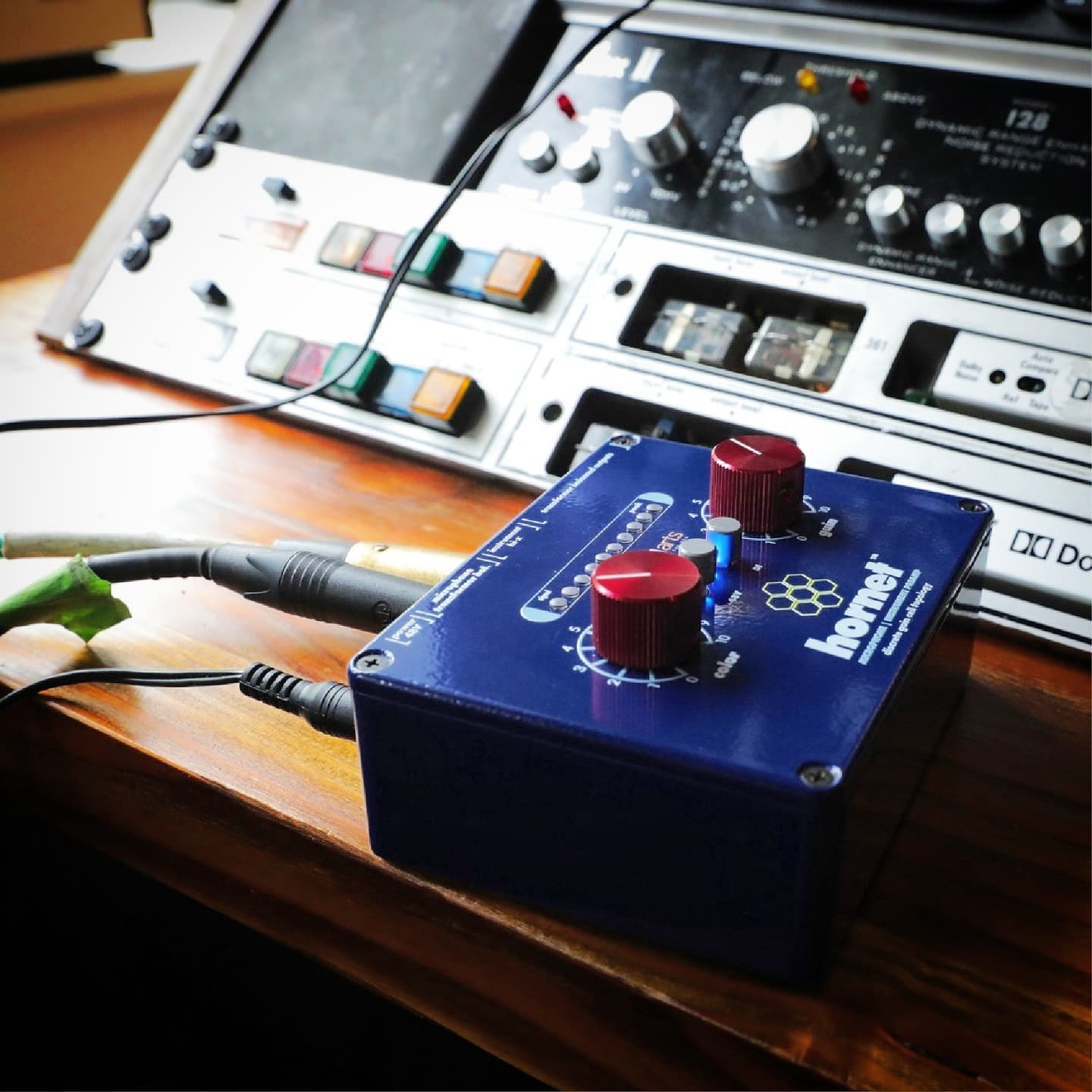
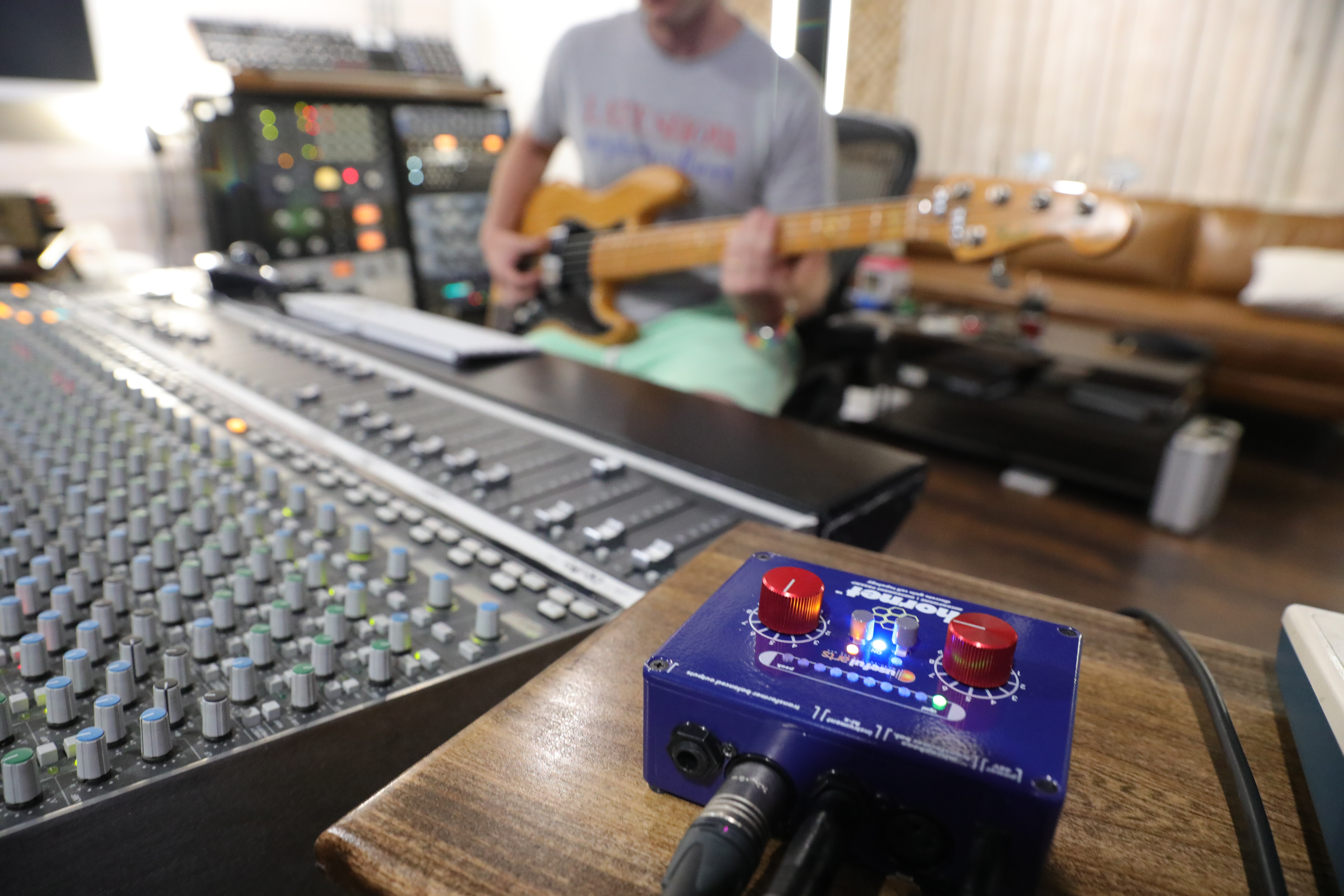
His presentation used the Useful Arts Hornet, a professional microphone preamplifier that fits inside a standard guitar pedal enclosure, as a real-world case study in principled engineering tradeoffs. The Hornet retails for $300. It competes sonically, Swann argued, with preamps that cost ten to twenty times more.
The Challenge: A Studio in a Backpack
The concept for the Hornet came from a specific conversation. Jerry Barnes, bassist for Nile Rodgers and Chic and a longtime instructor at the Berklee School of Music, had been using Swann's tube gear and delivered a challenge: young musicians today aren't buying rack equipment. They want a MacBook Pro, an audio interface, and something that fits in their backpack and sounds great in a hotel room.
"Using this, I know that several major artists have recorded their vocals in a hotel room," Swann said. The goal was to bring serious analog signal quality into a portable, affordable form, without surrendering the design principles that made his tube gear worth building in the first place. Those principles start with a philosophy about what a microphone preamplifier actually does.
"What I'm talking about today is a product that adds 10 to 60 dB of gain to a signal," Swann told the audience. "It's not that exciting a concept, and it's been done for 100 years. So why is it still something worth obsessing over?" His answer: because gain is the easy part. The hard part is what happens to the signal along the way. A cheap op-amp preamp will give you gain, low noise, and flat frequency response. It will also, as Swann put it, sound "totally uninspiring." The specs will be fine. The soul will be missing.
The Design Philosophy: Measure What Matters, Build for the Rest
Swann's central argument, which he acknowledged sits uncomfortably alongside conventional electrical engineering, is that the standard toolkit of measurements does not fully capture the subjective experience of a signal. Frequency response, THD, noise floor: these matter, and he designs to them. But they don't explain why some preamps make engineers smile and others get bypassed.
"A simulation or a measurement will tell you if the circuit's going to work. It will tell you how much gain you're going to get. It will tell you roughly where the pitfalls for distortion and noise are. But it doesn't really explain why some preamps instantly make people smile."
His explanation centers on harmonic distortion, specifically the second harmonic. When an amplifying device adds a second harmonic to a signal, it adds a frequency exactly one octave above the fundamental. That octave relationship is not random. The human brain, Swann explained, identifies pitch partly through harmonic multiples. A 440 Hz tone is recognized as an A in part because of 880 Hz. "We are wired as humans to appreciate a subtle addition of harmonics into sound." Second harmonic distortion, applied at the right level, triggers that response without being audible as distortion at all.
The Hornet includes a variable "color" control that blends in harmonic distortion continuously, from clean to a level that produces an obvious subjective effect. "I've done thousands of demos where people turn a knob, and you always know exactly where they're going to start smiling." The frequency response, he noted, remains flat within a fraction of a dB regardless of where the control is set. The difference is not in what the spectrum analyzer shows. It is in what the listener feels.
The solid-state circuitry in the Hornet produces a second and third harmonic blend, which Swann compared to the character of vinyl playback. The fully pure second harmonic he achieves in his tube designs, using an EF86 pentode in a cold configuration, is not practically achievable in the Hornet's form factor, but the result occupies what he described as a design space between the round warmth of a Neve and the more clinical character of an API.
He demonstrated this at Blackbird Studios in Nashville, running a four-microphone drum kit simultaneously into a vintage Neve console, an API preamp, and the Hornet, then playing all three back for the IEEE audience over Zoom. Predictably, the compressed audio and laptop speakers softened the differences, but the discussion that followed was substantive. Listeners with trained ears picked up distinct signatures in the low end, the transients, and the top-end clarity, and their descriptions did not always align with what Swann expected to hear, a point he found more interesting than troubling.
"I think if you put on headphones, you would hear profound differences. And I'm not saying everybody's going to decide one is better. For different productions, for different songs, for different feelings, each one of those is going to have its place."
The Signal Path: Where the Budget Went
Every design decision in the Hornet involved careful consideration.
The input transformer. The most expensive component in the box is a custom humbucking input transformer designed with Dave Guerin at CineMag. Swann's original plan used a smaller, cheaper transformer for both input and output. It functioned like an antenna, picking up 60 and 120 Hz hum from the environment. The humbucking configuration, with two coils wired out of phase, solved the problem cleanly. "It worked like a charm." Even though the transformer adds nearly $20 per unit in cost, it makes an important difference, so Swann chose not to compromise here.
Single-ended topology throughout. Everything in the Hornet runs single-ended, meaning one device handles the full waveform rather than splitting it between a positive and negative half. This generates more heat, draws more power, and creates sensitivity to power supply noise. It also, Swann argued, produces a character that differential circuits cannot replicate. "Everything I do is single-ended for that reason." He acknowledged the tradeoffs directly, spent real effort on power supply quality to compensate, and made the call.
Headroom. The Hornet runs from a 48-volt wall wart, processed through linear regulators and capacitor multipliers to produce a clean high-voltage internal supply. It can output a +26 dBu signal cleanly. This is because the audible operating range sits well below the circuit's limits, in the region where the devices perform at their best. "We're taking all of the problem areas, where performance starts to diminish, and moving them to an area we'll never use."
Gain staging. Rather than taking the full 60 dB of gain in one or two stages and using heavy negative feedback to control the result, the Hornet distributes gain across multiple stages, none of which is asked to do more than 15 dB. Negative feedback is minimized. "I don't design to specifications. I design to smiles."
The output stage. Swann uses a TI op-amp at the output, specifically for current gain, to drive the output transformer robustly. He acknowledged that purists would probably prefer a discrete single-ended output stage, as Neve used. He also acknowledged that the gapped transformers that made Neve's approach work are no longer reliably available. He made a pragmatic choice and moved on.
The DI input. The Hornet's instrument input bypasses the input transformer entirely, using a discrete JFET to achieve the high input impedance an instrument source requires. Input impedance is limited to 100 kilohms for noise reasons; his tube DI products, where the power supply design gives more room to work, can go to 20 megohms.
Manufacturing: How Neoden USA Fits the Picture
Swann started Useful Arts Audio building very small volumes of tube preamps by hand, but when demand started to increase and a distribution deal came through, he had to make a decision. He couldn't afford to keep soldering surface-mount components under a microscope by hand.
"I went online, and this was almost ten years ago, and there wasn't much out there except the Neoden machines that were well-reviewed on YouTube. You really didn't know what you were getting..." He acted on what he called blind hope. Four days later, a pick-and-place machine arrived. What followed were weeks of late-night training sessions with engineers at the factory in China. Those exchanges became relationships. Those relationships became Neoden USA.
Today Swann builds the Hornet on a Neoden 10 pick and place machine along with a YS350 stencil printer and an IN6C reflow oven, placing 143 surface-mount components across approximately 49 unique part values per board. The boards run through a bismuth-alloy solder paste reflow process at 138 degrees Celsius, well below the threshold that threatens components, and exit the oven as substantially complete assemblies. Through-hole work, the input transformer, the pushbutton switches, the XLR and quarter-inch jacks, is done by hand afterward.
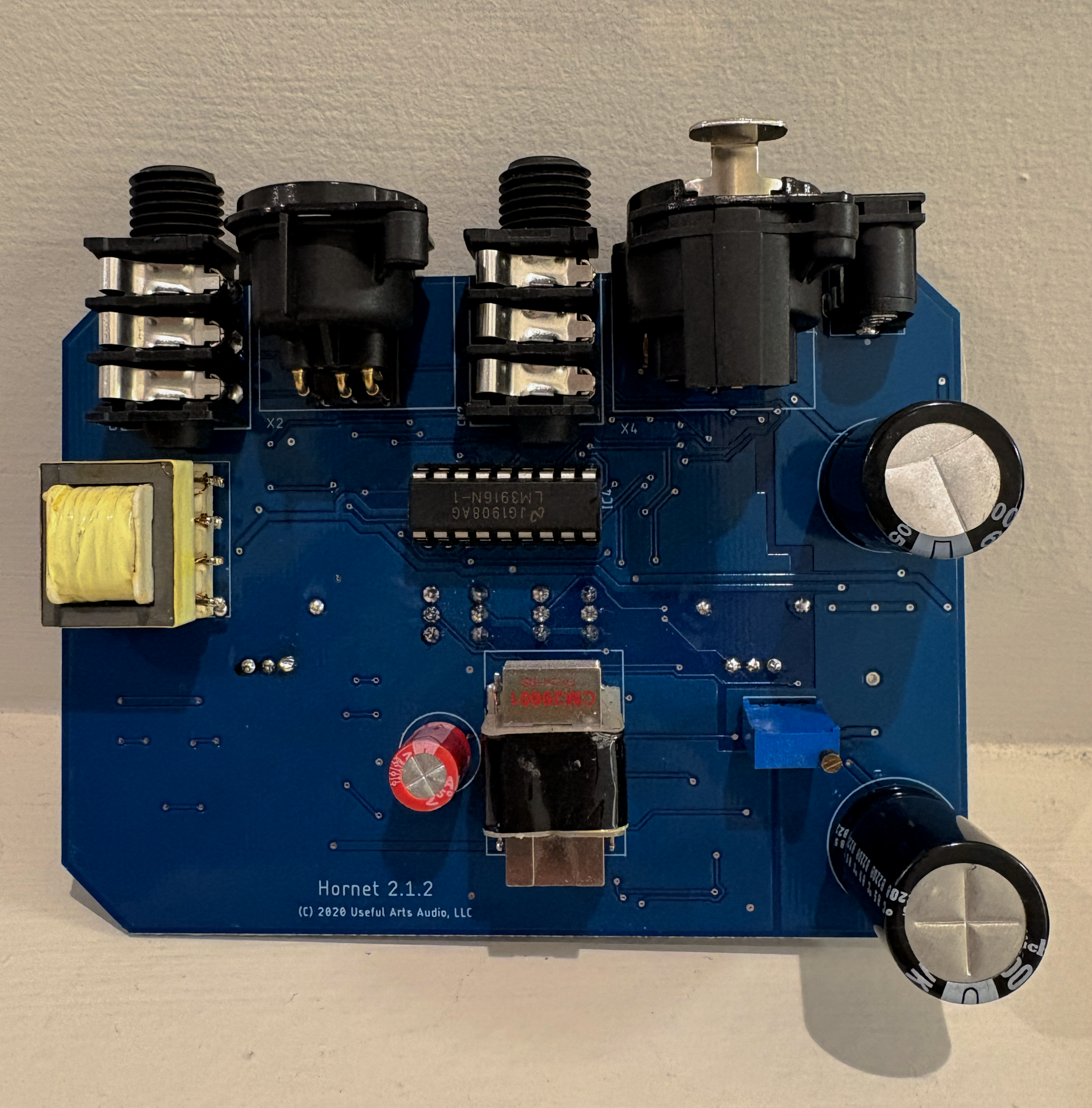
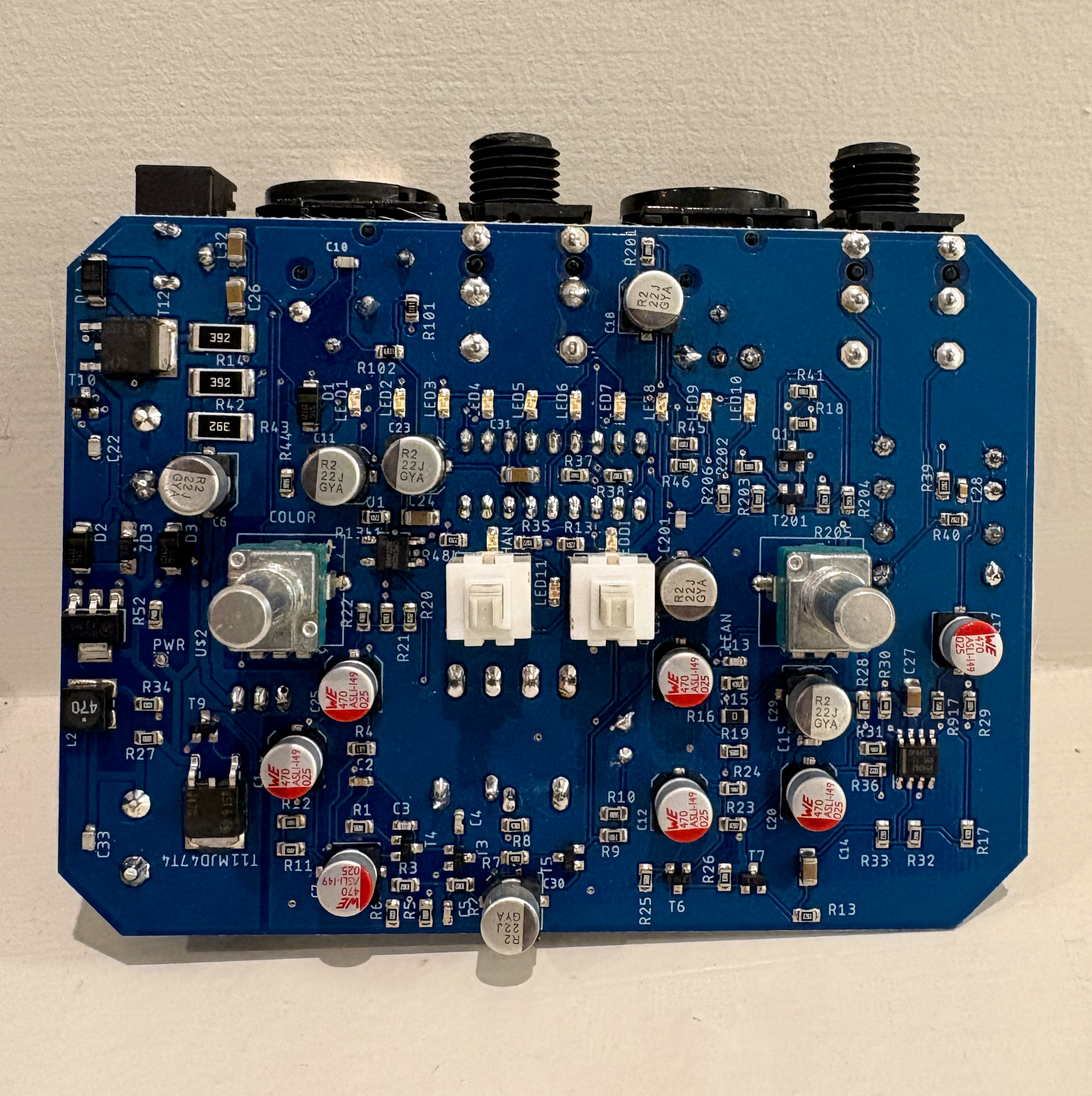
The decision to go all-SMT was not purely about automation. It shaped the product's design. "There's no audio component on this board that had to be compromised because of how it was going to be manufactured. The design for manufacturability happened at the board level." One board, no ribbon cables, no inter-board connectors. Everything that could be surface-mount was surface-mount.
Swann gave the Neoden 10 specific credit for removing a constraint he'd lived with on the smaller Neoden 4: part height. The earlier machine couldn't handle components taller than 5 millimeters. "With the machine I'm using now, there's no component I can't place. I feel liberated as a designer. I don't have to design to the machine. I design to the product."
The industry standard is that component costs should be 10 to 20 percent of retail price. By that metric, he said, "I'm a complete failure. My parts costs are much higher than that." The custom input transformer, the C&K pushbutton switches that replaced the 6-cent parts that failed after ten uses, the bismuth solder paste: each of these was a conscious decision to prioritize the product over the margin.
The pick-and-place machine is where the math recovers. "Far more important than the cost of a component is the cost of a human minute." 143 surface-mount components means roughly 300 solder joints the oven handles automatically. The labor that remains is focused, skilled, and irreducible. The machine makes the rest possible.
Lessons for Anyone Building Something
Swann closed with thoughts prompted by an audience question: if he had to do it over, what would he study?
"Neuroscience," he said, without hesitation. "Because I'm so focused on audio and creating an experience for a listener that really can't be described in technical terms very well, I would like to know more about the psychoacoustics. I would like to know more about the way the brain is processing the signals that I'm helping to generate."
That answer captures something about how Swann approaches the work. The Hornet is not only an electrical engineering project, it's a psychoacoustic one. The engineering is in service of a specific human experience, and every tradeoff, from the expensive transformer and the single-ended topology, to the variable color control and bismuth paste, is evaluated against that standard.
For anyone building their own product, the framework he described is applicable well beyond audio:
Start from a clear principle, be passionate, and create something unique. Use alternative methods to build your product.
Protect the non-negotiables. The input transformer cost him margin and made the product. But he kept it because he knew how important it was.
Understand where to compromise, and be willing to make those cuts. The wall wart is inexpensive. The stencil printer was manual for years. The board is designed to minimize human errors and increase efficiency.
Build to scale from the beginning. The Neoden machines were an important strategic addition to his setup, chosen before the product existed in its current form, and the product was designed around what they made possible.
"I started this company knowing I was not going to be able to afford to build 10,000 of them with a contract manufacturer," Swann said. "It was going to have to be done in-house, with a small number of people, with as much automation as possible, even though ultimately everything is hand-built."
The Hornet is proof that the two ideas are not contradictory.
Watch the Full Presentation
Peter Swann's complete IEEE talk, covering the Hornet's journey from concept through finished product, is available to watch in full here: IEEE LICN CONFERENCE - Peter Swann Presentation - Useful Arts & Neoden USA
It includes the live manufacturing demonstration on the Neoden 10, the Blackbird Studios drum comparison, and an extended Q&A with the audience. If you're working through your own version of these tradeoffs, it's worth the time.
Useful Arts Audio products are available at usefulartsaudio.com. The Neoden pick-and-place machines Peter Swann uses to build them are available through Neoden USA at neodenusa.com.